Latest Posts
How to Be Productive at Home As a Student
Studying from home can sound ideal at first. There is no rushed walk to a lecture hall, no hunting for a free library seat, and no need to pack your whole day into one bag.
But once the novelty wears off, home can quickly become one of the hardest places to stay focused. Your bed is nearby, the kitchen keeps calling, your phone feels more interesting than your notes, and somehow a ten-minute break turns into an hour.
For students across the United Kingdom, whether at the University of Birmingham, the University of Leeds, the University of Nottingham or UCL, home study has become a normal part of university life.
Even students who love campus facilities often find themselves working from bedrooms, shared kitchens, dining tables or quiet corners of the house. The challenge is not just finding time to work. It is learning how to work well in a space that is full of distractions.
The good news is that productivity at home does not come from being naturally disciplined every hour of the day. It usually comes from building a routine, shaping your environment and making your workload feel more manageable.
Once those pieces start working together, studying at home becomes far less frustrating and much more effective.
Stop Waiting to “Feel Motivated”
One of the biggest mistakes students make when studying at home is expecting motivation to arrive before they begin. In reality, motivation is unreliable. Some mornings you will feel switched on and ready to go. On others, even opening your laptop may feel like a task in itself.
The students who stay productive are not always the most motivated. They are often the ones who get started anyway. That might mean opening one reading, writing one rough paragraph, or revising for just twenty minutes. Starting small matters because it lowers the pressure.
Once you begin, your brain often catches up.
This is especially important during busy periods of the academic year, when deadlines seem to appear all at once. A student at the University of Manchester working through coursework season may feel exactly the same late-term pressure as someone at Cardiff University revising for exams.
In both cases, waiting for the perfect mood can waste valuable time. Progress usually begins with action, not inspiration.
Create a Study Space That Signals “Work Mode”
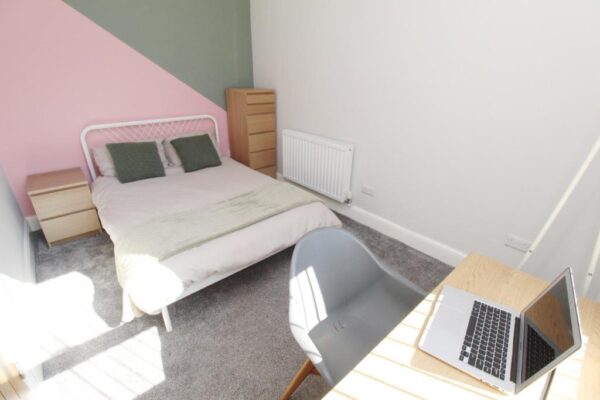
You do not need a Pinterest-perfect desk setup to be productive at home, but you do need a space that helps your brain separate study from rest.
This matters more than many students realise. If you revise in bed, eat where you work, and scroll on your phone in the same place where you are meant to focus, your day can start to feel blurred and unstructured.
Even in a small room, it helps to assign a clear work area. A desk is ideal, but a table, shelf or quiet corner can work too. The main thing is consistency.
When you sit there, it should mean you are there to study. Keep the space as clean as possible, with only what you actually need nearby. A notebook, charger, water bottle and laptop are useful. Piles of clutter, half-finished snacks and unrelated tabs are not.
Lighting also makes a real difference. Natural light can help you feel more alert, and a proper desk lamp is far better than trying to work in a dim room. Students in darker student houses, especially in older properties in places like Sheffield, Liverpool or Newcastle, often underestimate how much poor lighting affects concentration.
A brighter setup can make home study feel less heavy and less tiring.
Work With a Routine, Not Against One
Productivity at home improves when your days have some structure.
That does not mean planning every minute, but it does mean giving your day a shape. Without that, it is easy to drift. You tell yourself you will start after breakfast, then after a shower, then after checking messages, then after lunch, and suddenly the afternoon has gone.
A simple routine can change that. Wake up at a similar time each day. Get dressed properly, even if you are staying in. Decide when your study block starts, when you will break, and roughly when you want to finish.
These small actions reduce decision fatigue and make it easier to move into work mode.
This is particularly useful for students balancing different types of work, from online lectures to seminar prep to essay writing. A student at the University of Warwick may need long reading blocks, while someone at Nottingham Trent University might be switching between practical project work and deadlines.
A routine helps both. It gives the day momentum and makes it easier to stay on track when home life feels too relaxed.
Break Big Tasks Into Smaller Wins
A lot of home-study procrastination is not laziness. It is overwhelm. When a task feels too big, your brain treats it like a problem to avoid. “Write essay” is vague and intimidating. “Plan introduction and find three academic sources” feels much more doable.
The more specific you are, the easier it becomes to begin.
Instead of writing a giant to-do list full of broad tasks, break your work into smaller actions you can realistically complete in one sitting. Read one journal article. Make revision notes on one topic. Draft one section. Create one flashcard set. These smaller wins build momentum and stop work from feeling endless.
There is something psychologically helpful about being able to finish something properly. It gives you a sense of progress, which is vital when studying at home, where time can otherwise feel repetitive and unproductive.
If your day feels stuck, the answer is often not “work harder”. It is “make the task smaller”.
Learn How to Manage Distractions Properly
Home is full of distractions, and some of them are obvious. Your phone is the main one. Social media has a way of making five minutes disappear into fifty. Messages, videos and random scrolling can break your concentration before you have properly started.
Then there are the quieter distractions: people talking in the house, flatmates moving around, deliveries at the door, the temptation to tidy your room instead of writing your notes, or the habit of opening new tabs every time something feels slightly difficult.
These interruptions may seem minor, but together they chip away at focus.
The best approach is not to pretend distractions do not exist. It is to plan around them. Put your phone out of reach or on silent. Use app blockers if needed. Wear headphones or play instrumental background noise if your home is busy. If your kitchen is always chaotic at midday, study elsewhere during that period or take your break then.
Students in shared houses near places like the University of Bristol or Durham University often deal with this constantly, especially during revision season when everyone is at home more than usual.
Productivity improves when you design your study around real life, not an imaginary perfect environment.
Use Time in a Smarter Way
Not every task needs the same kind of energy. Some work needs deep focus, while other jobs are lighter and easier to complete when you are tired. Understanding that can help you use your time more wisely.
If your concentration is best in the morning, use that time for essays, problem-solving or revision that requires real thought. Leave simpler tasks, such as organising notes, replying to emails or formatting references, for the afternoon.
Many students try to do everything in whatever order it appears, but matching the task to your energy level can make a huge difference.
Working in timed blocks can help too. For some students, forty-five minutes of focused work followed by a short break feels natural. Others prefer an hour or ninety minutes. The exact timing matters less than the principle.
Work fully, then step away briefly. Without breaks, home study can become sluggish and unfocused. With them, you are more likely to return refreshed.
Don’t Neglect Sleep, Food and Movement
Productivity is not just about planning apps and study hacks. It is also physical. If you are tired, dehydrated and living on snacks, your concentration will suffer no matter how good your intentions are.
Sleep has a direct effect on memory, focus and mood. A student who stays up late every night and starts the day exhausted is making home study harder than it needs to be. The same goes for skipping meals or sitting in one place for hours without moving.
Your brain works better when your body is looked after properly.
This does not mean becoming obsessed with routines or wellness trends. It simply means respecting the basics. Drink water. Eat something decent before a study session. Stand up and stretch. Go outside if you can. Even a short walk can reset your attention and improve your mood.
During long academic stretches, these habits often make more difference than another productivity video ever will.
Be Realistic, Not Perfect
Perhaps the most important part of being productive at home is letting go of the idea that every day needs to be perfect. Some days will go well. Others will feel messy, slow or distracted. That does not mean you are failing as a student. It means you are human.
Studying at home requires self-management, and that takes practice. You learn what times suit you, what spaces help you focus, and what habits keep you moving when your energy drops.
Over time, productivity becomes less about forcing yourself to work and more about understanding how you work best.
For students across the UK, from the University of Edinburgh to King’s College London, the home-study struggle is a familiar one. But it is not unbeatable. With a clearer routine, a better setup and more realistic expectations, home can become a place where good work actually gets done.
Being productive at home is rarely about doing everything. It is about doing the right things, in the right way, often enough to make progress. And for most students, that is more than enough.
Blogs you may also like:
- Revision Season Is Starting: How to Make Your Student Room Better for Focus
- AI Study Tools Students Are Using in 2026 – and How Not to Get Flagged for Academic Misconduct
- Exam Hacks That Students Need to Know Ready for Summer Exam Season

The Autumn Reset: How to Build a Productive Study Routine in Your New Home
Autumn brings with it a sense of change. The leaves turn, the air sharpens, and for many students, it marks the start of a new academic year in a new home.
Whether you’ve moved into a bustling student house, a cosy flat, or even your first solo apartment, it’s the perfect time to reset and establish a study routine that actually works for you.
A productive routine isn’t about rigid schedules or endless to-do lists. It’s about creating a rhythm that balances your studies, social life, and downtime – all while making the most of your new living environment.
Here’s how to make your autumn reset a success.
Step One: Claim Your Quiet Zone
When you move into a new home, it’s tempting to flop onto the sofa with your laptop or spread notes across the kitchen table. But these shared, noisy spaces aren’t designed for deep focus. The first thing to do is claim a quiet study zone.
If you’re lucky enough to have your own room, carve out a corner just for studying. A desk by a window can give you natural light, which helps with focus and mood. If your space is small, think vertical – use wall organisers, floating shelves, or even a corkboard to keep things tidy.
For those sharing communal rooms, try establishing “study hours.” It might sound a bit formal, but you’d be surprised how quickly everyone adapts when expectations are clear. Invest in a decent pair of noise-cancelling headphones too – they’re worth their weight in gold when your housemate starts reheating curry during your essay-writing marathon.
Step Two: Sync with Your Housemates
Living with others can be one of the best parts of student life – late-night chats, shared meals, spontaneous Netflix binges. But it can also derail your study plans if you’re not careful. The trick is to sync, not clash.
Have an open conversation early on about everyone’s schedules. Are your housemates night owls or early risers? Do they have regular sports practice, late labs, or weekend shifts? By sharing routines, you can spot overlaps and avoid friction.
For example, if your housemate likes blasting music at 7pm, maybe that’s your cue for a gym session or library trip. On the other hand, you might discover a golden “quiet slot” in the afternoons when everyone else is out. Making your routine fit alongside theirs means less conflict and more productivity.
Step Three: Build a Routine That Sticks
It’s easy to make ambitious plans in September – colour-coded timetables, hourly breakdowns, a strict “study 9–5” mentality. But let’s be real: that rarely survives first contact with student life. Instead, aim for a flexible routine that works with your natural energy levels.
Ask yourself: When do you feel most focused? Some people thrive in the early mornings, others do their best thinking after dark. Block out your most important study sessions during these peak hours. Then add lighter tasks – like reading or organising notes – during low-energy times.
Use autumn’s natural rhythm to your advantage too. Shorter days make evenings ideal for winding down with lighter tasks, while brighter mornings can be harnessed for your hardest study work.
Don’t forget to schedule downtime as well. A study routine isn’t just about grinding; it’s about balance.
Step Four: Use Tools and Tricks to Stay on Track
Sometimes all it takes is a few clever tricks to keep your study routine ticking along.
The 25-Minute Rule: Also known as the Pomodoro Technique, this involves working in focused bursts with short breaks in between. Perfect for avoiding procrastination.
Visual Timers or Apps: A simple timer on your desk – or an app on your phone – can make study sessions feel more structured.
Weekly Reset Rituals: Every Sunday, take 30 minutes to plan your week. Set goals, check deadlines, and decide where you’ll study. Treat it like giving your brain a map before the week begins.
Above all, keep your tools simple. A cluttered system usually ends up unused.
Step Five: Make It Feel Like Home
Studying isn’t just about productivity – it’s also about comfort. Your new home should support your studies, not stifle them. Add little touches to make your study space inviting: a desk plant, warm lighting, or even your favourite mug on standby.
If you’re living in a busy household, try turning study time into a shared experience. Organise group study evenings in the living room or head to a café together. Sometimes, accountability (and a round of flat whites) is the best motivator.
And remember, balance is key. If you find yourself burning out, take a step back. Autumn is also about slowing down, enjoying seasonal walks, and recharging for the months ahead.
Conclusion: A Fresh Start for Autumn
Moving into a new home can feel like stepping into the unknown, but it’s also a chance to create fresh habits. By carving out a quiet study space, syncing with housemates, and building a flexible study routine, you can set yourself up for a productive term without sacrificing your social life.
Think of this autumn reset as more than just a study strategy – it’s an opportunity to design a lifestyle that works for you. And once the leaves have fallen and winter sets in, you’ll be glad you laid the groundwork early.
Read More